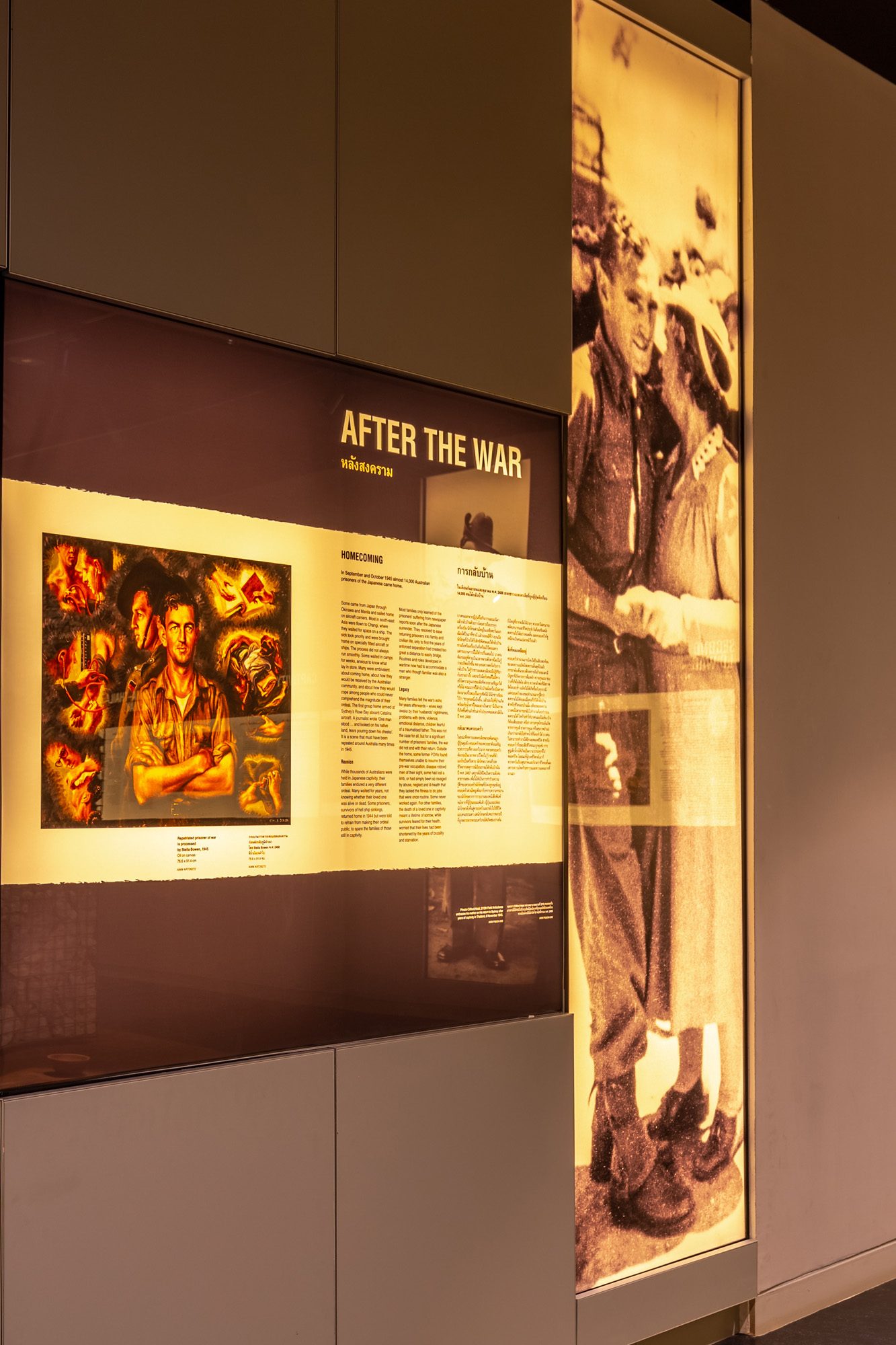
Hellfire Pass Interpretative Centre
This museum facility houses exhibits, photographs, and personal artifacts detailing the construction of the railway.
Visit this before walking the trail to contextualize the site layout.
Seventy-five kilometres northwest of Kanchanaburi town, a corridor of split rock runs through the hills of Sai Yok District. Prisoners of war and Asian labourers cut it by hand in 1943 for the Thailand–Burma Railway. This what is hellfire pass guide explains what the site is, what remains of it, and what a visit involves.
Quick answer
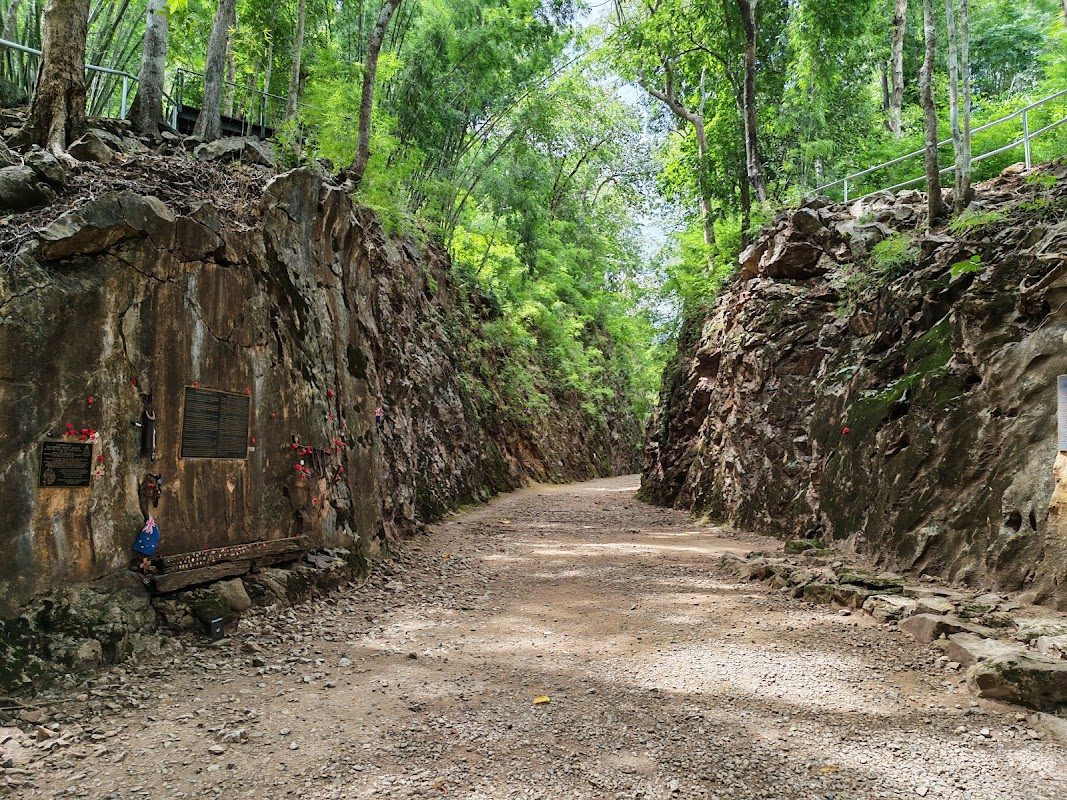
Hellfire Pass is the Konyu Cutting, the deepest rock excavation on the Thailand–Burma Railway, now a memorial and museum in Tha Sao Sub-district, Sai Yok District, Kanchanaburi. Entry is free, with donations welcome, and the site opens daily from 09:00 to 16:00. The name comes from torchlight on labouring prisoners at night, which observers likened to hell.
The cutting took roughly twelve weeks to open, and the men working it used hammers, steel tap drills and baskets rather than machinery. That detail explains most of what a visitor sees. The rock faces still carry drill scars, and the walls narrow to a corridor barely wider than the trackbed that once ran through it. When people ask what is hellfire pass, the short answer is a place name that stuck: labourers working through the night by carbide lamp and bamboo torch cast shadows on the stone, and the scene was compared to hell. The formal name is the Konyu Cutting, after the nearby construction camp. The context matters for understanding the answer. The Thailand–Burma Railway ran 415 kilometres between Ban Pong and Thanbyuzayat, and the Konyu section crossed a spur of hard rock that could not be routed around. Australian, British, Dutch and American prisoners of war worked alongside a far larger number of Asian labourers, known as romusha, whose losses were heavier and less recorded. That history is set out in detail elsewhere on this site; here it is enough to say the cutting is a grave marker as much as an engineering remnant. What stands at Tha Sao today is a hillside interpretive centre operated by the Australian Government's Department of Veterans' Affairs, together with a memorial platform and a walking trail that descends to the cutting floor and continues along the old railway formation. The centre is a working museum rather than a viewing platform, which is why a Hellfire Pass memorial visit takes longer than most Kanchanaburi landmarks. Audio guides carry survivor testimony, and many visitors stop partway through. Plan accordingly. The trail involves a steep return climb, the surface is uneven, and Sai Yok's afternoon heat is the main reason arrival timing is worth thinking about before setting out. Anyone building a Death Railway tour from Bangkok should treat this as the anchor stop rather than an add-on, and read this what is hellfire pass guide alongside the hours, access and highlights sections below. Sturdy shoes, water and a willingness to walk slowly are the practical requirements. Photography is permitted; loud conversation on the trail is not encouraged, and the site asks visitors to treat the cutting as a place of remembrance rather than a scenic overlook.
“The formal name is the Konyu Cutting; the name that stuck came from torchlight on rock at night.”
Hellfire Pass Interpretive Centre is open to visitors daily throughout the week, maintaining consistent operating hours for all visitors.
Hellfire Pass Interpretive Centre does not charge an entrance fee for visitors. The site is maintained through the support of the Australian and Thai governments.
Verdict: All visitors pay 0 THB to enter the site, though voluntary donations are accepted to support maintenance.
The best arrival window is 09:00–11:00. Arriving early helps you avoid the peak heat of the day and ensures sufficient time for the walking trails.
Cooler, dry weather, 20°C–30°C
These months offer the most comfortable conditions for walking the trail.
Hot and dry, 30°C–40°C
High temperatures make early morning visits essential during this period.
Humid with rain, 25°C–33°C
Expect periodic rainfall, but the site remains accessible during these months.
Verdict: The best time to visit is during the cooler, dry months of November to February, arriving promptly at 09:00.
Hellfire Pass is located in the Sai Yok District of Kanchanaburi, approximately 80 kilometers northwest of Kanchanaburi town. The most reliable approach for independent travelers is via private vehicle or taxi from Kanchanaburi city.
Highway 323 (Kanchanaburi-Sai Yok-Thong Pha Phum)
Kanchanaburi Bus Station to Hellfire Pass Memorial stop
Direct from Kanchanaburi town
The site is accessed directly via Highway 323; visitors arriving by bus should inform the driver they are traveling to the Hellfire Pass Memorial as it is a designated stop.
The Hellfire Pass site consists of an indoor interpretative center and an outdoor walking trail that follows the former route of the Death Railway. These features provide a structured way to navigate the rugged terrain and reflect on the site layout.
This museum facility houses exhibits, photographs, and personal artifacts detailing the construction of the railway.
Visit this before walking the trail to contextualize the site layout.
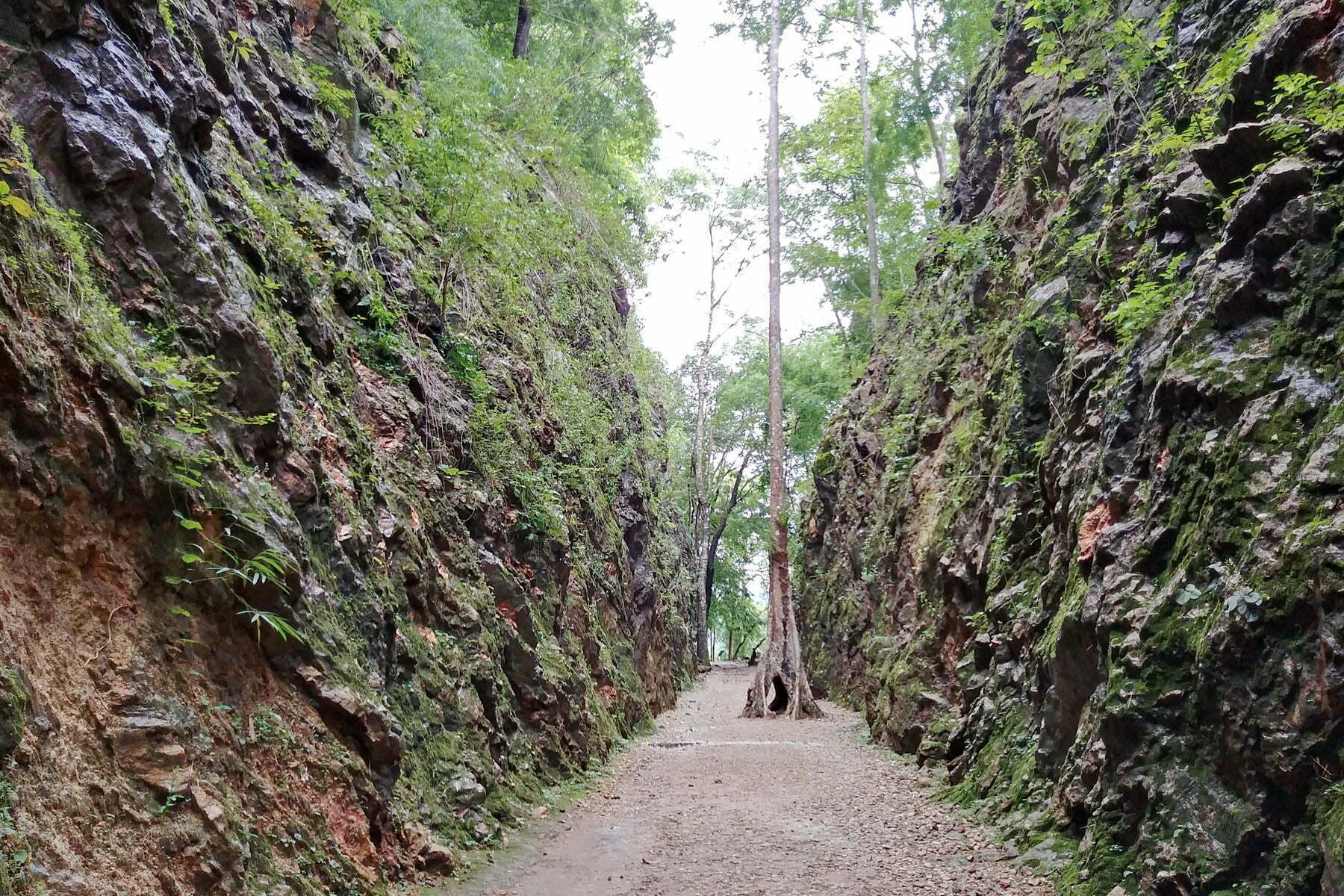
Known as Hellfire Pass, this is the most significant cutting on the route where workers excavated through solid rock.
Observe the drill holes in the rock face for scale.
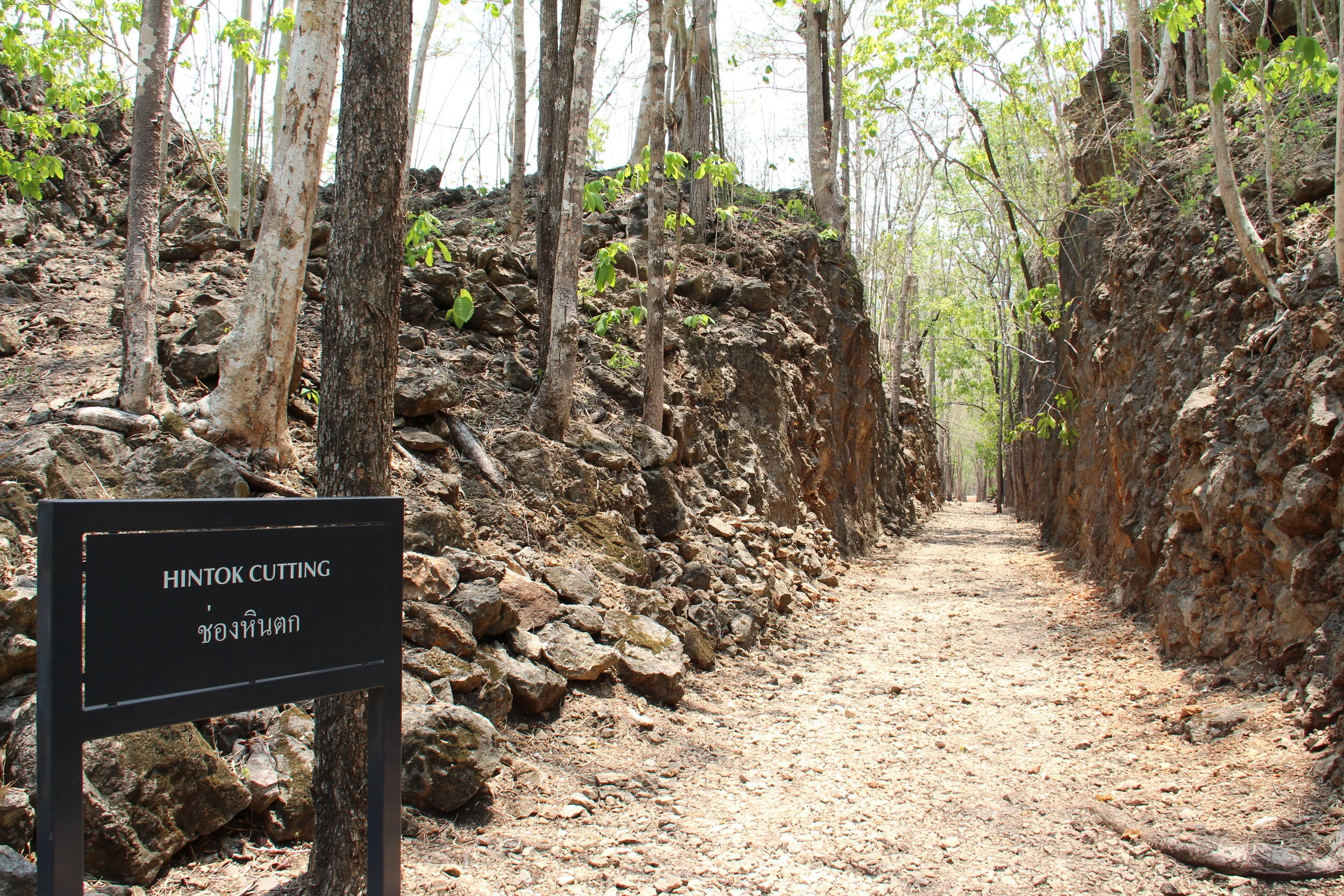
This segment features a smaller pass and embankment area that highlights the challenging geological conditions faced by the laborers.
Look for remnants of the original railway sleepers nearby.
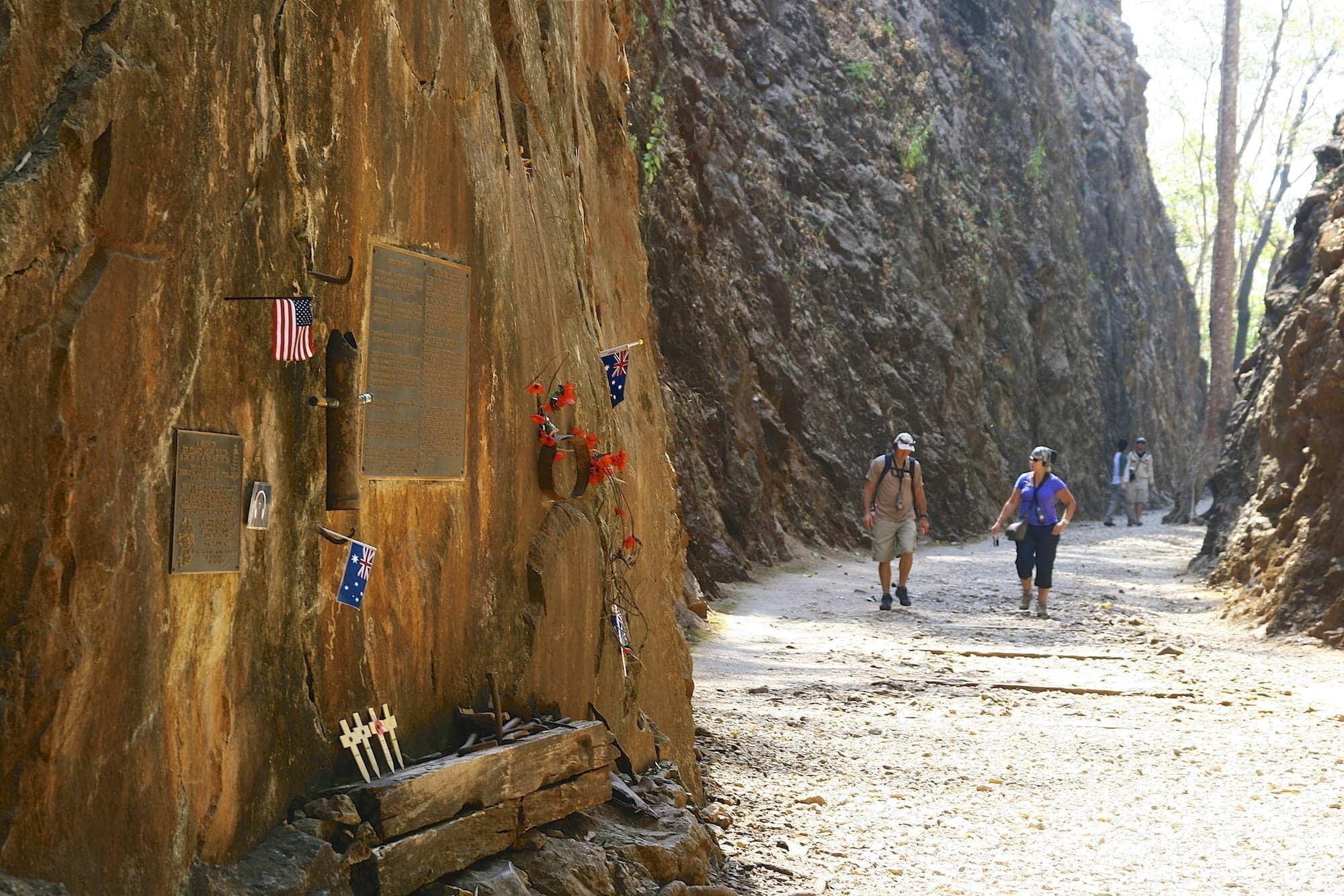
A series of trails ranging from short loops to longer treks that wind through the jungle and former railway beds.
Wear sturdy footwear as trails involve uneven terrain.
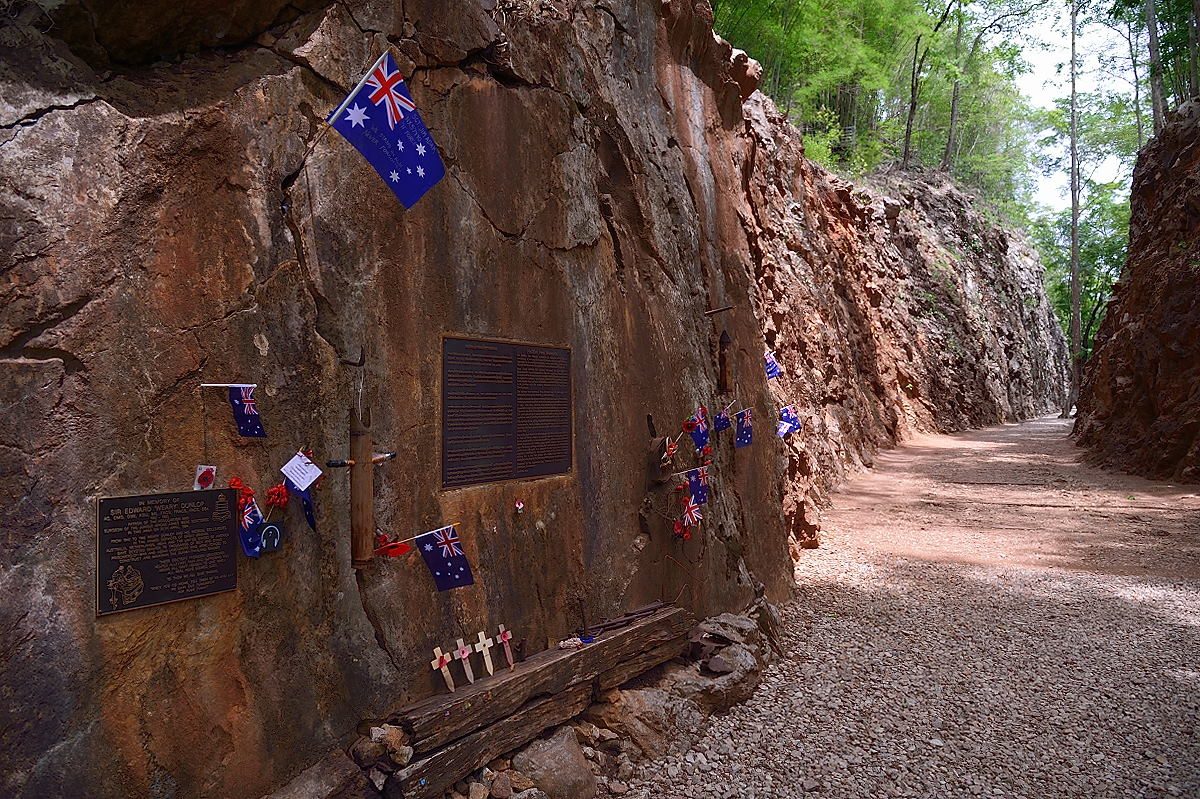
A dedicated space located along the trail containing wreaths and markers placed to honor the victims.
Pause here to view the commemorative plaques in silence.
The answer to what is hellfire pass begins in June 1942, when Imperial Japanese engineers began surveying a 415-kilometre rail link between Ban Pong in Thailand and Thanbyuzayat in Burma. The Allied naval blockade had made the sea route to Rangoon untenable. Japan needed a supply line by land. Construction fell to roughly 60,000 Allied prisoners of war and an estimated 200,000 Asian labourers, the rōmusha, conscripted from Malaya, Burma, Java and Thailand. The cutting itself lies at Konyu, in the Tenasserim Hills above the Kwae Noi. Work there ran from April to August 1943, during the period the Japanese called the Speedo — an order to complete the railway months ahead of schedule. Men worked eighteen-hour shifts. They cut through solid rock with hammer and tap drills, eight-pound sledges and baskets, moving spoil by hand. The largest excavation, Konyu Cutting, runs about 110 metres long and 25 metres deep at its highest wall. Prisoners named it Hellfire Pass for the sight of emaciated bodies lit by carbide lamps and bamboo fires at night. Cholera, beriberi, dysentery and beatings killed sixty-nine men at that cutting alone. The railway opened in October 1943. It functioned for twenty months. After the war the Thai government purchased the Thai section, and track through Konyu was lifted; jungle reclaimed the corridor for four decades. Australian veterans, notably J.G. "Tom" Morris, pushed to clear it from 1984, and the Australian government opened the Hellfire Pass Memorial Museum at Tha Sao in April 1998. So what is hellfire pass to a visitor now — the drill holes remain in the rock walls, unfilled. Sleeper impressions mark the trackbed. Poppies are left at the cutting's centre, and the ridge line above Konyu carries a memorial plaque facing the Kwae Noi valley.
Japanese engineers begin surveying the Thailand–Burma railway from Ban Pong to Thanbyuzayat in June.
Work starts on the Konyu cuttings under the accelerated Speedo construction period.
The Konyu Cutting is completed; sixty-nine men die at that section alone.
The Thailand–Burma railway is declared open and begins carrying supplies north.
The line ceases military use at the end of the Pacific war after twenty months of service.
Track through the Konyu section is lifted and the corridor is abandoned to jungle.
Australian veterans and volunteers begin clearing the overgrown cutting and trackbed.
The Hellfire Pass Memorial Museum opens at Tha Sao, funded by the Australian government.
Everything you need to know about what is hellfire pass
What is hellfire pass is a question often asked by visitors to the Death Railway in Thailand. It refers to a deep mountain cutting created by Allied prisoners of war and forced laborers during World War II, serving now as a somber memorial and site of remembrance.
There is no entrance fee as the site is free to enter, though donations to the memorial are welcome. This allows everyone to learn about the history of the site without cost.
The facility is open every day of the week, including Monday through Sunday, from 09:00 to 16:00. This consistent schedule helps visitors plan their trip to the Sai Yok District accurately.
The best arrival window is 09:00–11:00 to avoid the peak heat of the day and ensure sufficient time for the walking trails. This early start also helps visitors navigate the Kanchanaburi terrain before temperatures rise.
Most visitors find that a few hours are sufficient to walk the memorial trails and explore the museum exhibitions. This duration ensures you have enough time to reflect on the history of this significant World War II site.
While the interpretive centre is accessible, the walking trails feature varying terrain that requires moderate fitness. Visitors should consider the heat and distance when deciding if the trail walk is appropriate for their group.