24 hr
Death Railway & Hellfire Pass Day Trip from Bangkok
Journey through WWII history at Hellfire Pass, ride the legendary Death Railway, and visit the River Kwai bridge
Reserve
Hand-picked by our editors — only the best 5 day trips from 140 reviewed.
Verified partners for every tour, free cancellation where available, and instant confirmation on every booking.
24 hr
Journey through WWII history at Hellfire Pass, ride the legendary Death Railway, and visit the River Kwai bridge
Reserve
10 hr
Journey to Kanchanaburi to discover WWII history along the Burma Railway and River Kwai bridge
Reserve
14 hr
Discover WWII history and jungle cascades on this sustainable full-day adventure from Bangkok
ReservePrices from verified partners. Availability updates in real time at checkout. Free cancellation policies apply where shown.
The landmarks, rooms, and views travelers on this tour remember — all visible on a single visit.
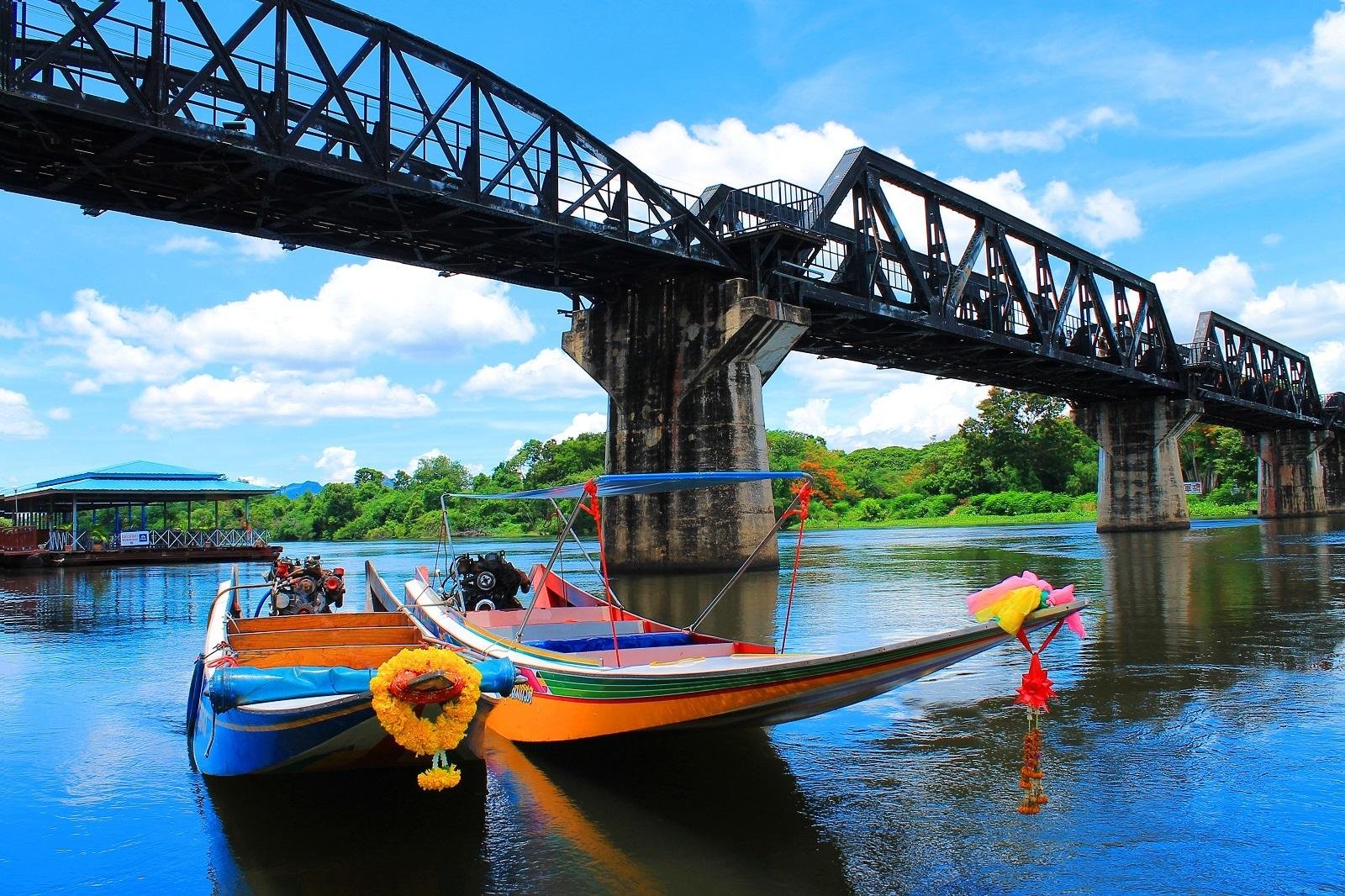
This iconic steel structure was rebuilt after WWII and remains the centerpiece of any death railway tour from bangkok.
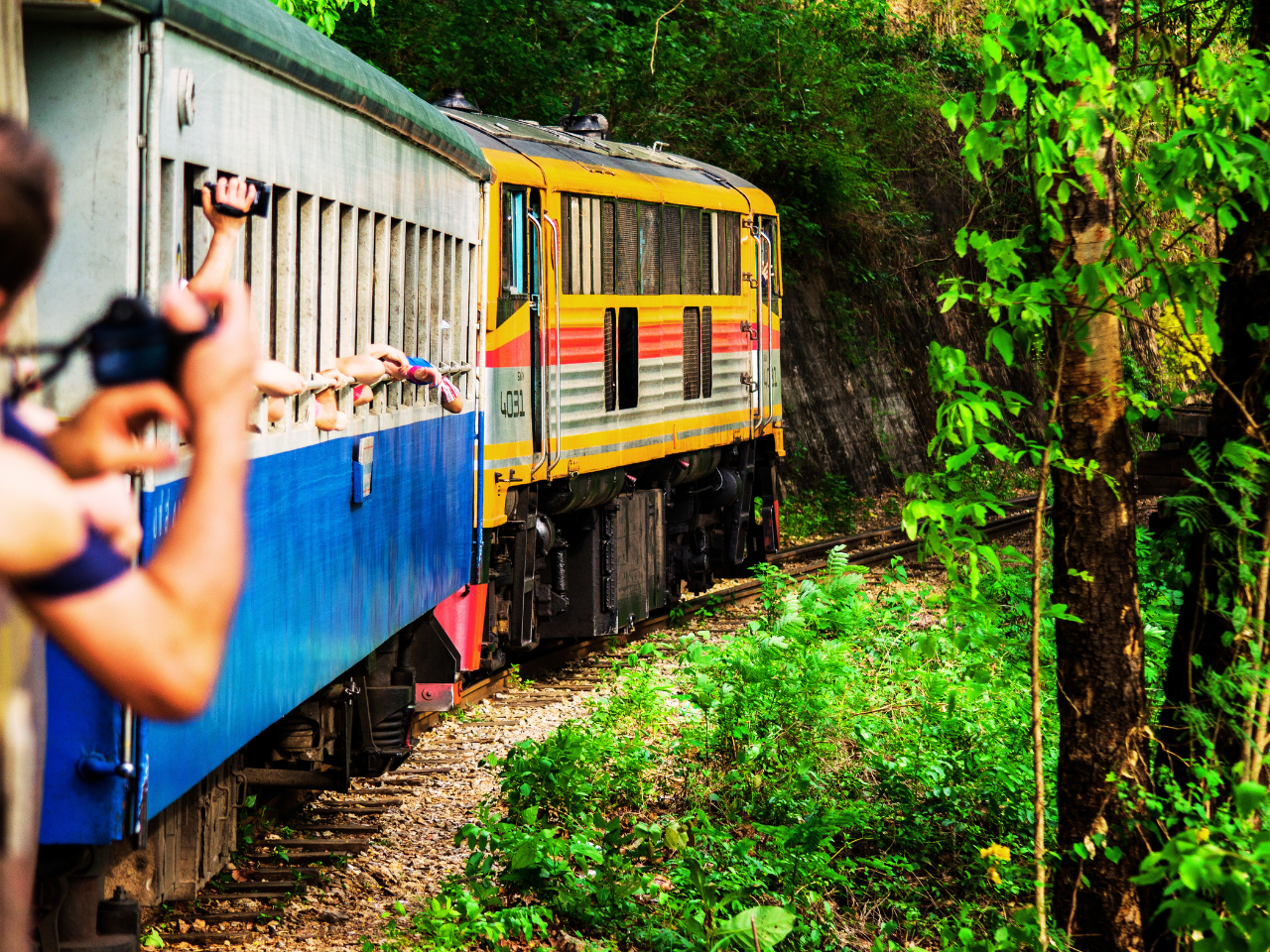
Famous for its precarious wooden trestle section, this stop is a highlight of the scenic train journey.
A dramatic curved section of the tracks offering stunning views of the river valley.
The final resting place for thousands of Allied POWs, located near the main railway hub.
An informative museum providing essential historical context for the construction of the death railway.
They complement each other; most visitors who do both call the combined Erawan excursion the more diverse choice. Choosing the right death railway tour from bangkok depends on whether you prefer deep historical immersion or a balanced mix of scenery and WWII heritage.
| Feature | Top pick Historic Rail Focus | Nature & History Combo |
|---|---|---|
Primary Focus |
WWII legacy and rail engineering | |
Total Duration |
8–10 hours | |
Physical Exertion Level |
Low walking intensity | |
Depth of History |
Comprehensive focus on prisoner experience | |
Ideal For |
History enthusiasts and train aficionados | |
Complementary Experience |
Kanchanaburi landmarks including war cemeteries | |
| See tickets → |
Verdict: Opt for a specialized death railway tour from bangkok tour if you prioritize scholarly detail, whereas the waterfall combo offers a better pace for those seeking varied scenery alongside their death railway tour from bangkok tickets.
Choose your ticket, select your date, and reserve in under two minutes. Secure checkout handled by our verified partner.
Instant confirmation by email, with a mobile voucher you can save offline. No printing, no queuing at a collection desk.
Arrive at the entrance, show your voucher on your phone, and walk in. Most tickets include priority or skip-the-line access.
Practical details for your visit straight from our verified partners — hours, access, rules, and how to get there.
Modest clothing is recommended when visiting nearby war memorials and cemeteries. Wear comfortable walking shoes for crossing the bridge.
There are no security checkpoints for the bridge itself. Visitors on a death railway tour from bangkok should keep personal items secure while navigating the crowded pedestrian walkways.
Photography is permitted and encouraged at the bridge. Arrive early for the best lighting conditions for your death railway tour from bangkok photos.
The bridge features a metal pedestrian walkway. While it can be navigated on foot, surfaces may be uneven; exercise caution on a death railway tour from bangkok.
The bridge is family-friendly, though parents should closely supervise children due to active train tracks. A death railway tour from bangkok is a historical experience suitable for older children.
Numerous food stalls and restaurants are located near the bridge entrance. It is recommended to carry bottled water during your death railway tour from bangkok.
Best time to go, insider tips, nearby landmarks, and the cancellation fine print — flip through to skim what matters to you.
Flexible, no hidden fees.
As a public landmark, entry is free of charge. Tour bookings for a death railway tour from bangkok typically offer free cancellation up to 24 hours prior to the scheduled departure.
The Bridge over the River Kwai stands on eleven spans, and only nine of them are original. The two angular trusses at the centre are post-war replacements, supplied by Japan as reparations after Allied bombing destroyed the middle of the crossing in 1945. Death Railway Tour From Bangkok tours converge on that seam where new steel meets old, a repair plainly visible from the walkway itself. The line the bridge carries was built between June 1942 and October 1943. At full length it ran 415 kilometres, from Ban Pong in Thailand to Thanbyuzayat in Burma, with roughly 258 kilometres on Thai soil. Surveyors had estimated five years for the work. It was completed in sixteen months. The route followed the Khwae Noi valley because the river offered the only reliable supply line through the range, and the rock was taken out by hammer, tap and bamboo scaffold rather than machinery. Around 60,000 Allied prisoners of war and more than 200,000 conscripted Asian labourers, the rōmusha, were put to the task. The cost is counted in the tens of thousands. A 77-kilometre section survives between Kanchanaburi and Nam Tok, still operated by the State Railway of Thailand. Its most photographed stretch is the Wampo Viaduct at Tham Krasae, a teak trestle bolted to a cliff face above the water. Further north lies Konyu Cutting, known as Hellfire Pass for the torchlight that lit the night shifts, its walls closing to some seven metres of bare rock. Kanchanaburi railway day tours pair the two, while River Kwai Bridge tour itineraries usually add the Thailand–Burma Railway Centre and the war cemetery opposite it, where 6,982 graves are kept in mown rows. Trains cross the bridge at walking pace, and pedestrians step aside into the refuge bays as they pass. The structure itself sits on Mae Nam Khwae Rd, Tha Ma Kham, Mueang Kanchanaburi District, Kanchanaburi 71000, Thailand, and it costs nothing to walk: entrance is 0 THB, free entry to the Bridge over the River Kwai. That absence of a turnstile shapes the character of the place. Among Thailand World War II landmarks, few are so unguarded, so open to the ordinary traffic of a Thursday afternoon. Death Railway Tour From Bangkok tickets therefore buy transport, interpretation and the long westward road, not admission. The bridge belongs to whoever chooses to walk it.
"Only nine of the bridge's eleven spans are original; the rest is repair, and the repair is the history."
A step-by-step walkthrough of the visit — what you'll see, how long each stage takes, and the details that matter.
You leave Bangkok in the dark, because a Death Railway Tour From Bangkok tour that reaches the crossing inside the 06:00–09:00 window beats both the heat and the coach convoys. Two and a half hours later the vehicle turns onto Mae Nam Khwae Rd and stops short of the water. You walk straight out onto the sleepers. There are no gates and no queue; you step up and go, the gaps between the timbers wide enough to show green water moving underneath. Halfway across you reach a refuge bay, a small steel balcony bolted to the truss, and you stand in it while the Nam Tok train grinds past at little more than walking speed. You count the spans as you return. Nine curved, two angular. Then the day turns inland. At Tham Krasae you ride the Wampo Viaduct, teak trestle pinned to the cliff, and you keep your arm inside the window. At Konyu Cutting you descend the steps into rock walls that close to seven metres, where the air drops several degrees and the drill marks are still legible under your hand. Later, at the war cemetery, you read a few of the 6,982 headstones — name, age, regiment — and you take longer over it than you meant to.
Entry to the Bridge over the River Kwai itself is 0 THB.
The bridge is open 24 hours a day, allowing for flexibility during your death railway tour from bangkok.
The bridge is part of an active railway; visitors should stay within designated pedestrian walkways during a death railway tour from bangkok.
The best arrival window is 06:00–09:00 to avoid mid-day heat and large crowds from Bangkok day-trip tour buses.
The site is public and free, so no special tickets are required for general access during a death railway tour from bangkok.
Yes, families often enjoy the educational aspects of a death railway tour from bangkok, provided children are supervised near tracks.
You can reach the site by train from Thonburi Station in Bangkok or by car as part of a booked death railway tour from bangkok.
No formal dress code exists for the bridge, but respectful attire is advised when visiting nearby cemeteries on a death railway tour from bangkok.
You can easily visit the Thailand-Burma Railway Centre or Kanchanaburi War Cemetery during your death railway tour from bangkok.